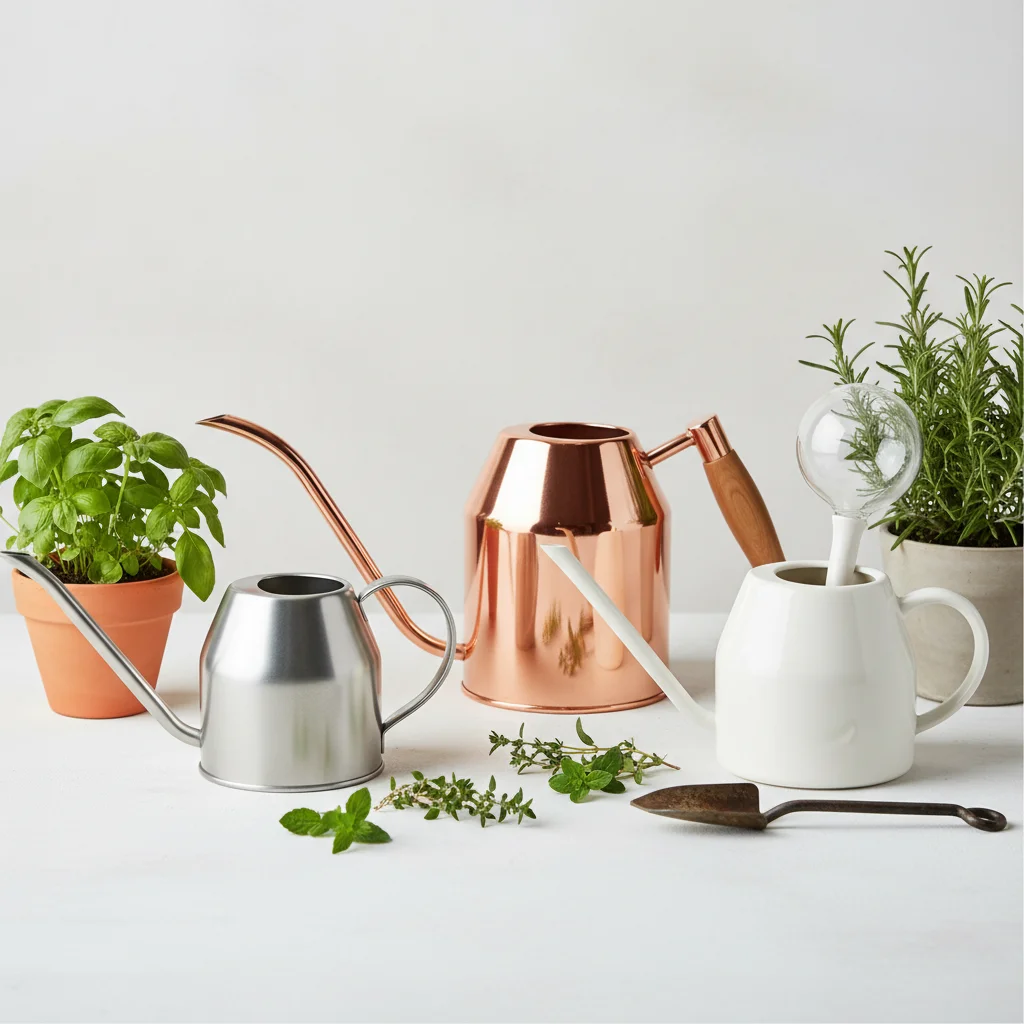
Choosing the right watering can for your herbs is crucial for their health and longevity. The best style of watering can for herbs typically features a long, slender spout and a fine rose (sprinkler head) to deliver water gently and precisely. This design prevents overwatering delicate roots and minimizes soil displacement, ensuring your herbs receive optimal hydration without damage. There are three primary styles that excel for herb care: long-spout plastic cans, small metal cans with a fine rose, and mini indoor watering cans.
Long-spout plastic watering cans are a popular choice for herb enthusiasts due to their lightweight nature and excellent reach. The extended spout allows you to easily navigate around dense foliage and reach the base of individual plants, which is particularly useful for herbs grown in crowded pots or on windowsills. Many plastic models also come with a removable fine rose, offering versatility for different watering needs. This style is often very affordable and comes in a variety of colors to match your kitchen or garden aesthetic. When selecting a plastic can, look for durable, UV-resistant plastic to ensure it withstands regular use and sunlight exposure without becoming brittle.
Small Metal Watering Cans with Fine Rose
For those who appreciate durability and a classic aesthetic, small metal watering cans equipped with a fine rose are an excellent option for herbs. These cans, often made from galvanized steel or copper, offer superior longevity compared to plastic. The fine rose attachment is essential for herbs, as it creates a gentle, rain-like shower that won’t flatten delicate leaves or wash away soil. Metal cans tend to be heavier, providing a stable feel during watering, and their smaller capacity is ideal for the modest water requirements of most herb plants. Consider a model with an ergonomic handle for comfortable use, especially if you have multiple herb pots to tend to.
Mini Indoor Watering Cans for Precision
|
Our Picks for the Best Watering Can in 2026
As an Amazon Associate I earn from qualifying purchases.
|
||
| Num | Product | Action |
|---|---|---|
| 1 | Plant Watering Can,35oz Metal Watering Can,Stainless Steel Indoor Plants with Long Curved Spout,Small Bonsai Outdoor Garden Modern Decorative(Black) |

|
| 2 | Watering Can for Indoor Plants, 35 oz/1000 ml Metal Stainless Steel Pot with Long Spout for House Plants Bonsai Outdoor Garden Flower Decorative (Black) |
|
| 3 | 2 Gallon Watering Can, Outdoor Watering Can for Plants, Garden Water Can with Removable Long Spout and Stainless Steel Sprinkler Head, Large Water Can for Greenhouse (Dark Blue, 2 Gallon) |
|
| 4 | Indoor Plants Watering Can for Indoor Plants Long Probe Soil Moisture Meter Long Spout 47 oz Watering Cans Water Monitor Indicator for Pot Flower House Gardening Farming |
|
| 5 | 350ml Small Watering Can for Indoor Plants, 12oz Mini Plant Watering Pot with Long Spout and Handle, Black Tiny Stainless Steel Watering-Can for Outdoor Indoor Plants Flower Garden |
|
| 6 | 2 Gallon Watering Can, Garden Watering Can Outdoor, Plant Water Can with Removable Long Spout and Stainless Steel Sprinkler Head, Large Plastic Outdoor Watering Cans for Gardening Flower Plants |
|
| 7 | Watering Can for Indoor Outdoor Plants, Modern Small Watering Cans with Removable Nozzle, Long Spout Watering Can for Indoor Bonsai Plants Garden Flowers 1/2 Gallon 1.8L 60OZ (Dark Green) |
|
| 8 | Small Watering Can for Indoor Plants, Mini Indoor Watering Can with Long Spout and Handle 12 Oz / 350 ml Rust-Proof 304 Stainless Steel Material |
|
| 9 | Watering Can for Indoor and Outdoor Plants - Long Spout Water Can for Garden, Flower, House Plants - 1.8L/1/2 Gallon (Green) |
|
| 10 | Long Spout Watering Can Indoor, Small Watering Cans for House Plants, Flowers, Succulents 33.8oz(Green) |
|
Mini indoor watering cans are specifically designed for small houseplants and herbs, making them perfect for precision watering. These cans typically have a very small capacity, often less than a liter, and a very narrow, elongated spout. This design allows for pinpoint accuracy, delivering water directly to the soil without splashing leaves or making a mess. They are particularly useful for herbs grown in small pots, terrariums, or those requiring very specific moisture levels. While they may require more frequent refills for a larger collection of herbs, their control and compact size are unmatched for delicate tasks. Look for models with a comfortable grip and a stable base to prevent accidental tipping.
Key Features to Consider for Herb Watering Cans
- Spout Length and Diameter: A long, slender spout is crucial for reaching the base of plants without disturbing foliage. A narrow diameter ensures a controlled flow.
- Rose (Sprinkler Head): A fine rose is paramount for a gentle, even distribution of water, preventing soil erosion and protecting delicate herb leaves.
- Capacity: For herbs, a smaller capacity (0.5 to 1.5 liters) is often sufficient, preventing the can from becoming too heavy and allowing for precise measurement.
- Material: Plastic offers lightweight convenience and affordability, while metal (galvanized steel, copper) provides durability and a classic look.
- Handle Design: An ergonomic handle ensures comfort and control, especially important for precise watering tasks.
Ultimately, the best watering can for your herbs will depend on your specific needs, the number of herbs you have, and your personal preference for material and style. Prioritize a can that offers precise control over water delivery to ensure your herbs thrive.Many gardeners find it beneficial to have both a small indoor can for daily tasks and a slightly larger one for when their herbs are thirstier or if they have a more extensive collection.Investing in the right tool will make your herb care routine more efficient and enjoyable, leading to healthier, more vibrant plants.
Get our weekly buyer guide
Practical specs, not advice. Unsubscribe anytime.
